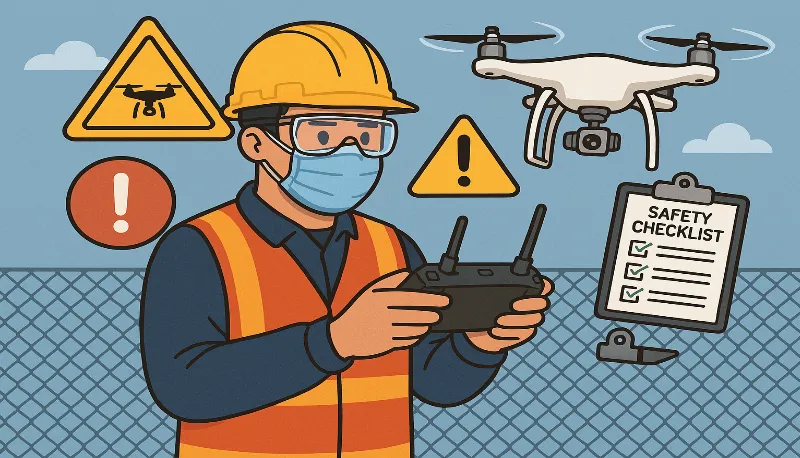
FAQ: CAA Open Category Operations for Drone Pilots
FAQ: CAA Open Category Operations for Drone Pilots
Welcome to 120mAGL's comprehensive FAQ section for CAA Open Category operations under EASA regulations. Whether you're a new drone pilot, an experienced operator, or a professional commercial pilot, this guide aims to answer your most pressing questions. Remember, safety and compliance are our top priorities. Always consult official EASA documentation for complete requirements.
General Questions
1. What is the Open Category for drone operations?
The Open Category is one of three operational categories under EU Regulation (EU) 2019/947. It covers low-risk operations where drones can be flown without prior authorization, provided the pilot complies with specific rules such as flying below 120 meters (Reg 2019/947 Art. 4).
2. Do I need a license to fly a drone in the Open Category?
No, you don't need a license to fly a drone in the Open Category, but you must complete the online training and pass the A1/A3 certificate exam if your drone weighs more than 250g or has a camera (Reg 2019/947 Art. 8).
- ▸A1 (Fly Over People): For drones under 250g or drones certified as safe to fly over people. Flying over crowds is prohibited (Reg 2019/947 Art. 4).
- ▸A2 (Fly Close to People): Requires an A2 Certificate of Competency and is for drones weighing up to 4kg. The pilot must keep at least 30 meters away from people (or 5 meters if using low-speed mode) (Reg 2019/947 Art. 4).
- ▸A3 (Far From People): For drones weighing up to 25kg. Pilots must maintain a minimum distance of 150 meters from residential, industrial, or recreational areas (Reg 2019/947 Art. 4).
- ▸Register as a UAS operator if your drone weighs more than 250g or is equipped with a camera (Reg 2019/947 Art. 14).
- ▸Follow the 120-meter altitude limit (Reg 2019/947 Art. 4).
- ▸Fly within visual line of sight (VLOS) (Reg 2019/947 Art. 4).
- ▸Avoid flying over crowds or gatherings in A1 and A3 subcategories (Reg 2019/947 Art. 4).
Safety and Legal Compliance
5. What happens if I fly higher than the 120-meter altitude limit?
Flying above 120 meters in the Open Category is prohibited unless you have specific authorization under the Specific Category (Reg 2019/947 Art. 4). Violating this rule may result in penalties, including fines or legal action. Always monitor your altitude and adhere to the limit for safety and compliance.
6. Can I fly my drone at night?
Yes, you can fly your drone at night in the Open Category, provided you maintain visual line of sight and ensure the drone is equipped with lights to remain visible (Reg 2019/947 Art. 4).
7. What are the consequences of not registering as a UAS operator?
Failure to register as a UAS operator when required could result in penalties, including fines. Registration is mandatory for drones over 250g or equipped with cameras, except for toy drones (Reg 2019/947 Art. 14).
Operational Scenarios
8. Can I fly near an airport in the Open Category?
No, flying near airports is prohibited in the Open Category. You must maintain a minimum distance of 5 km from airport boundaries unless you have specific authorization under the Specific Category (Reg 2019/947 Art. 4).
9. Am I allowed to fly over people?
Flying directly over uninvolved people is prohibited in the A2 and A3 subcategories. Only drones under the A1 subcategory that are lighter than 250g or certified for safe overflight can fly over people, but flying over crowds is strictly prohibited under all subcategories (Reg 2019/947 Art. 4).
10. Can I fly my drone in urban areas?
Yes, but only under the A1 or A2 subcategories and with adherence to their specific requirements. A2 operations require an A2 Certificate of Competency and maintaining a safe distance from people (Reg 2019/947 Art. 4).
11. What should I do if I want to fly my drone near private property?
You must avoid flying directly over private properties without permission and maintain a safe distance to ensure privacy and safety. For A3 subcategory operations, maintain at least 150 meters from residential, industrial, or recreational areas (Reg 2019/947 Art. 4).
Entry-Level Compliance
12. How can I register as a UAS operator?
Visit your national aviation authority’s website (e.g., the CAA in the UK) and complete the online registration process. You will need to provide your personal details and information about your drone. Registration is required for drones weighing more than 250g or equipped with cameras (Reg 2019/947 Art. 14).
13. What is the A1/A3 certificate, and how do I get it?
The A1/A3 certificate is an online competency exam required for pilots flying drones over 250g or equipped with cameras in the Open Category. It covers basic knowledge of airspace rules, safety procedures, and privacy regulations. You can obtain this certificate by completing the online training and passing the test provided by your national aviation authority (Reg 2019/947 Art. 8).
Advanced and Commercial Operations
14. Can I fly my drone for commercial purposes in the Open Category?
Yes, commercial operations are allowed in the Open Category as long as you comply with the category's rules. Ensure your operation falls under the low-risk criteria, such as maintaining the 120-meter altitude limit and visual line of sight (Reg 2019/947 Art. 4). For higher-risk operations, you may need authorization under the Specific Category.
15. How do I transition to the Specific Category if my operation exceeds Open Category limits?
You will need to submit an operational authorization application to your national aviation authority, including a risk assessment and safety measures. This is required for operations beyond visual line of sight (BVLOS), near airports, or above 120 meters (Reg 2019/947 Art. 5).
Critical Safety Information
16. What should I do if I lose control of my drone?
Immediately follow your drone's emergency procedures, such as activating the return-to-home (RTH) function if available. Notify local authorities if your drone enters restricted airspace or causes safety concerns.
Disclaimers and Resources
- ▸Regulations may change; always verify with official sources.
- ▸This is educational content and not legal advice.
- ▸Consult official EASA documentation for complete requirements.
For further details, explore related resources on 120mAGL.com and consult your national aviation authority’s website for updates. Fly safely and responsibly!

About the Author
Roberto Gramellini
Aviation expert and UAS regulations specialist with extensive experience in EASA compliance and drone operations. Passionate about making complex regulations accessible to drone pilots across Europe.
EASA Regulatory Compliance Notice
This content is for educational purposes only and is based on EASA regulations current at the time of generation.
Always consult the official EASA documentation and your local aviation authorities for the most current regulations and legal compliance requirements before operating any UAS.