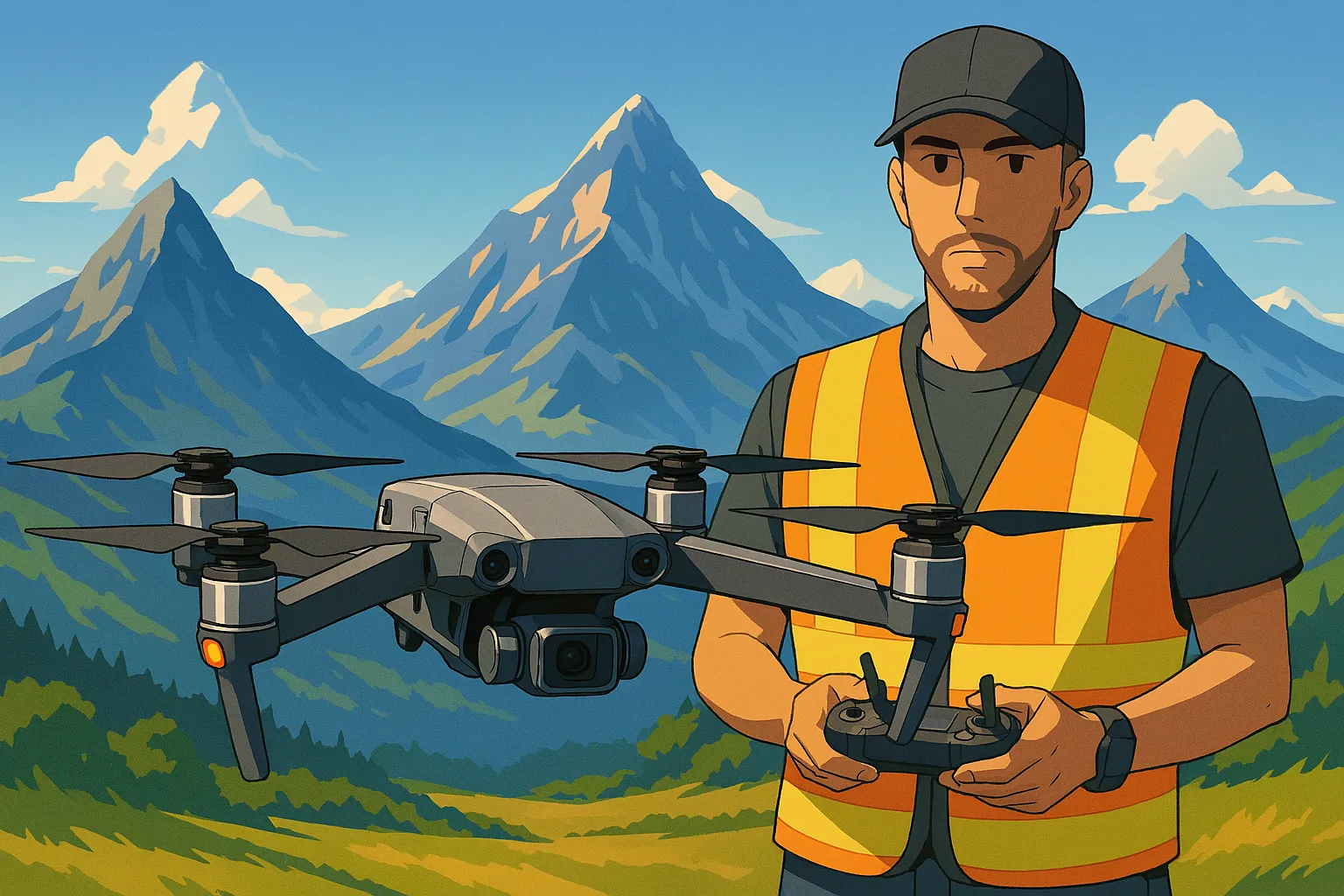
Operations Over People: EASA Drone Regulations Explained
Operations Over People: EASA Drone Regulations Explained
Understanding EASA’s regulations for flying drones over people is essential for safe and legal operations in Europe. Whether you're a hobbyist, commercial operator, or using drones for inspections, knowing the rules can protect your safety, your equipment, and your legal standing.
In this guide, 120mAGL.com will break down everything you need to know about the Operations Over People category, including practical tips, real-world scenarios, and step-by-step compliance guidance.
Let’s dive into how to fly responsibly and stay within the limits of EASA regulations!
What Are Operations Over People?
Operations Over People refers to drone flights conducted directly over individuals who are not participating in the operation. This category is regulated under EASA’s UAS rules to ensure public safety and manage risks associated with drone use.
Why Are These Rules Important?
Flying over people poses unique risks, such as injury from falling drones or accidents due to technical malfunctions. EASA’s framework aims to minimize these risks while allowing for safe operations in certain controlled scenarios.Categories of Operations Over People
EASA defines four subcategories for operations over people based on drone weight, capability, and operational intent. Here’s a breakdown:
Category 1: Very Low Risk (C0-Class)
- ▸Drones weighing less than 250 grams fall into this category.
- ▸These operations are considered very low risk due to the lightweight nature of the aircraft.
- ▸No authorization is required for flights over uninvolved people, but flying over crowds is prohibited.
Category 2: Low Risk (C1-Class)
- ▸Drones weighing between 250 grams and 900 grams.
- ▸Flights over uninvolved people are allowed, but flying over crowds is still prohibited.
- ▸Additional technical requirements apply, such as geo-awareness systems and noise limits.
Category 3: Moderate Risk (C2-Class)
- ▸Drones weighing up to 4 kg.
- ▸Operations are permitted close to people, but direct flights over uninvolved individuals are restricted.
- ▸Pilots must maintain safe separation distances, and drones require technical features like remote identification and geo-awareness.
Category 4: High Risk (C3/C4-Class)
- ▸Covers drones weighing more than 4 kg.
- ▸Flights over uninvolved individuals are prohibited unless special permissions are obtained.
- ▸Typically used in professional scenarios, such as inspections or commercial applications.
Detailed Regulatory Requirements
Key Requirements Across All Categories
EASA regulations for operations over people emphasize safety and compliance. Here are the general rules:- ▹Drones must meet specific class requirements (C0, C1, C2, etc.) as defined under EASA’s technical standards.
- Drone Certification
- ▹Pilots must hold the appropriate certification for their category of operation, such as the Open category A1/A2/A3 certificates.
- Operator Competence
- ▹Geo-awareness systems, remote identification, and fail-safe mechanisms are mandatory for higher-risk categories.
- Operational Safety Measures
Regulatory Citations
These requirements are outlined in Regulation 2019/947, specifically:- ▸Drone certification and class requirements: Art. 4
- ▸Operator competence: Art. 5
- ▸Operational safety measures: Art. 6
Practical Scenarios
Example 1: A Hobbyist Filming in a Park
You’re using a DJI Mini 2 (C0-Class) to capture scenic footage in a public park. Since the drone weighs less than 250 grams, you can legally fly over uninvolved people, as long as you avoid crowds and comply with local airspace restrictions.Safety Tip: Always check for obstacles and wind conditions to ensure your drone remains stable during flight.
Example 2: Commercial Photographer at an Event
A professional photographer is hired to capture aerial shots at a wedding. Using a DJI Air 2S (C1-Class), the operator can fly over uninvolved people but must avoid direct flights over large groups. Additional measures like geo-awareness and remote identification must be activated.Example 3: Structural Inspection in Urban Areas
A drone operator conducts a building inspection using a DJI Matrice 300 RTK (C3-Class). Flights must avoid uninvolved individuals unless special permissions are granted. The operator must maintain safe separation distances and ensure compliance with urban airspace regulations.Common Misconceptions
Misconception 1: "I Can Fly Over Crowds If My Drone Is Light Enough"
Correction: Flying over crowds is prohibited in all categories, regardless of drone weight.Misconception 2: "I Don’t Need to Register My Drone for Category 1 Operations"
Correction: Registration is required for all drones except C0-Class, as per Reg 2019/947 Art. 14.Misconception 3: "I Can Ignore Geo-Awareness Systems for Low-Risk Flights"
Correction: Geo-awareness is mandatory for C1-Class drones and above to ensure airspace safety.Compliance Checklist
Follow this step-by-step checklist to ensure compliance with EASA regulations:
- ▹Check your drone’s weight and class certification.
- Determine Your Drone’s Category
- ▹Complete the registration process via your national aviation authority.
- Register Your Drone
- ▹Acquire the necessary certificates for Open category operations (A1/A2/A3).
- Obtain Operator Certification
- ▹Enable geo-awareness and remote identification systems.
- Activate Required Safety Features
- ▹Evaluate potential hazards, such as wind conditions, obstacles, and uninvolved people.
- Conduct a Risk Assessment
- ▹Avoid flying over crowds or restricted areas.
- Plan Your Flight Path
Safety Reminders
Always prioritize public safety when flying drones.- ▸Keep your drone within visual line of sight (VLOS).
- ▸Avoid flying over crowds or densely populated areas.
- ▸Perform pre-flight checks to ensure your equipment is functioning properly.
- ▸Follow the 120m AGL altitude limit to stay within legal airspace.
Frequently Asked Questions
Q: Can I fly over people with a C2-Class drone?
A: Flights close to uninvolved individuals are permitted, but direct flights over people are restricted.Q: Do I need insurance for operations over people?
A: Yes, liability insurance is mandatory for commercial operations under Reg 2019/947 Art. 8.Q: What happens if I accidentally fly over a crowd?
A: This could result in penalties or fines, depending on the severity of the violation and national regulations.Q: Are there exemptions for emergency services?
A: Emergency services may operate drones over people under specific conditions outlined in Reg 2019/947 Art. 16.Q: How do I check my drone’s classification?
A: Refer to the manufacturer’s documentation or certification label on the drone.Summary
Flying drones over people requires careful adherence to EASA regulations. By understanding the four risk categories, complying with technical requirements, and following best practices, pilots can ensure safe and legal operations.
Key Takeaways
- ▸Avoid flying over crowds, regardless of drone category.
- ▸Activate mandatory safety features like geo-awareness and remote identification.
- ▸Always perform a risk assessment before conducting operations over people.
Stay informed, fly responsibly, and check back with 120mAGL.com for the latest updates on European drone regulations.
Additional Resources
Relevant Regulations
- ▸Regulation 2019/947
- ▹Art. 4: Drone Class Requirements
- ▹Art. 5: Operator Competence
- ▹Art. 6: Safety Features
Related Articles
- ▸Understanding the 120m AGL Altitude Limit
- ▸EASA Open Category: A1/A2/A3 Explained
- ▸Risk Assessments for Drone Pilots
Disclaimer
This guide provides an overview of EASA regulations as of October 2023. Regulations may change, so always consult official EASA documentation and your national aviation authority for the latest rules.
Stay safe and fly responsibly with 120mAGL.com – your trusted source for European drone regulations!

About the Author
Roberto Gramellini
Aviation expert and UAS regulations specialist with extensive experience in EASA compliance and drone operations. Passionate about making complex regulations accessible to drone pilots across Europe.
EASA Regulatory Compliance Notice
This content is for educational purposes only and is based on EASA regulations current at the time of generation.
Always consult the official EASA documentation and your local aviation authorities for the most current regulations and legal compliance requirements before operating any UAS.