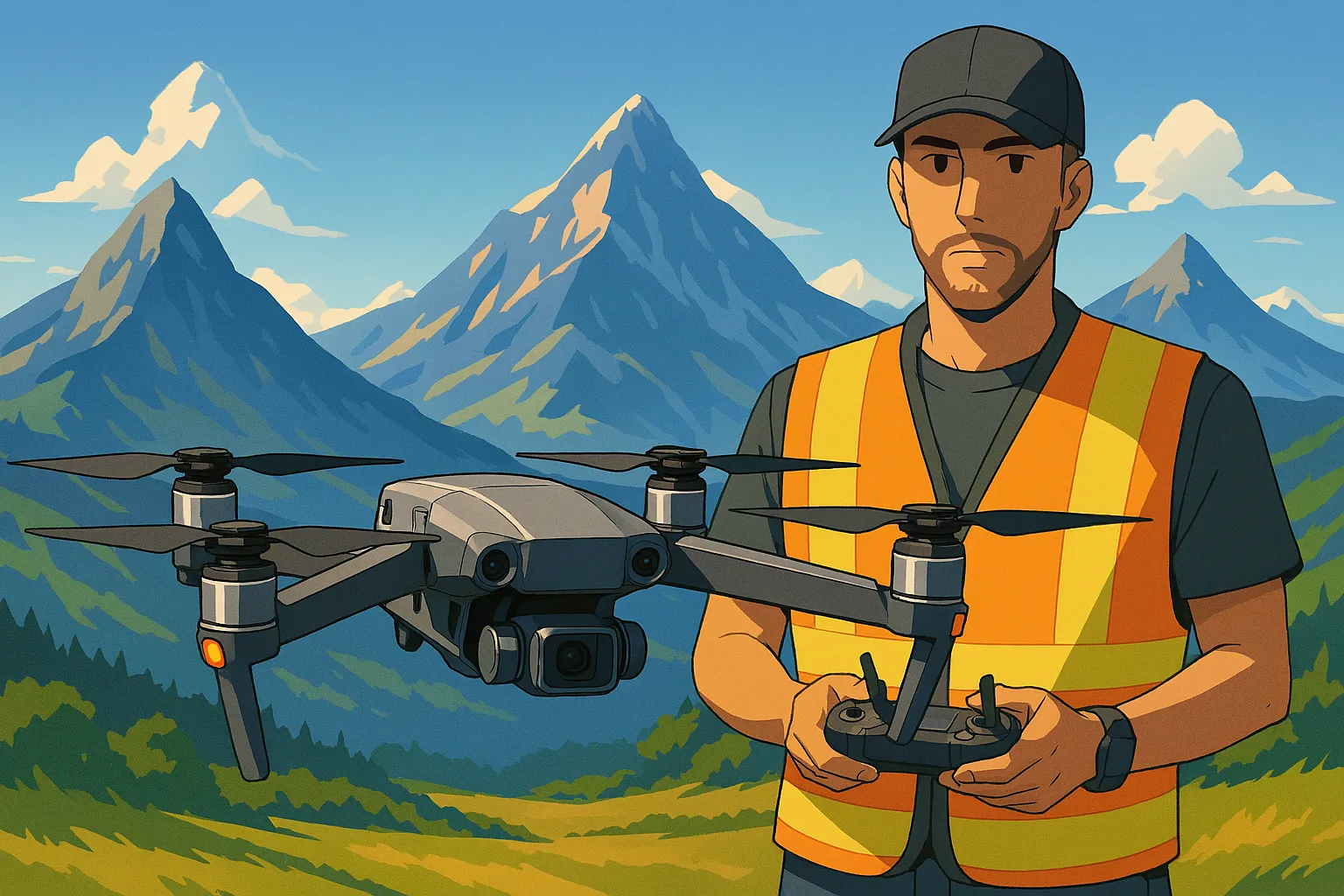
Commercial Drone Operations in the UK: A Definitive Guide for Pilots
Commercial Drone Operations in the UK: A Definitive Guide for Pilots
Are you ready to take your drone flying to the next level with commercial operations in the UK? Whether you’re a photographer capturing breathtaking aerial shots or a surveyor assessing critical infrastructure, understanding the rules for commercial drone operations is vital. Flying commercially opens up exciting opportunities, but it also comes with responsibilities and legal requirements.
At 120mAGL.com, we know the importance of flying safely and legally, especially in the UK where regulations are strictly enforced. In this comprehensive guide, we’ll cover everything you need to know about operating drones commercially in the UK. From understanding legal requirements to practical tips for compliance, this resource is designed to help you navigate the skies responsibly.
By the end of this article, you’ll understand the essentials of UK drone laws, how to meet licensing and operational requirements, and how to ensure your flights stay within the 120m AGL limit. Let’s dive in!
Understanding Commercial Drone Operations in the UK
What Are Commercial Drone Operations?
Commercial drone operations refer to any use of drones for business purposes, where the operator is compensated for their services. Examples include:- ▸Aerial photography for real estate or events
- ▸Infrastructure inspection (e.g., bridges, power lines)
- ▸Agricultural monitoring and precision farming
- ▸Delivery of goods, including medical supplies
- ▸Mapping and surveying land
Commercial operations are distinct from recreational drone flying and are subject to stricter regulations to ensure safety, security, and compliance with airspace rules.
Why Are Regulations Important?
The UK’s drone regulations aim to:- ▸Ensure the safety of other airspace users and the public
- ▸Prevent interference with manned aviation
- ▸Protect sensitive areas such as airports, military zones, and wildlife reserves
- ▸Encourage responsible drone use and operator accountability
By following these rules, drone pilots can avoid fines, legal consequences, and accidents, while demonstrating their professionalism in the industry.
Key Regulations for Commercial Drone Operators
Operating drones commercially in the UK requires adherence to specific rules and regulations. Below, we break down the key requirements based on UK Regulation (EU) 2019/947.
1. Drone Classification
The UK follows the European Union’s classification system for drones, which divides them into categories based on weight, capabilities, and intended use. These categories include:- ▸Open Category: For low-risk operations, typically for recreational use or very basic commercial tasks. No prior authorization is required, but restrictions apply to ensure safety (Reg 2019/947 Art. 4).
- ▸Specific Category: For medium-risk operations, including most commercial activities. Requires an Operational Authorization from the CAA (Reg 2019/947 Art. 5).
- ▸Certified Category: For high-risk operations, such as transporting people or dangerous goods. Certification for the UAS and operator is required (Reg 2019/947 Art. 6).
2. Registration Requirements
In the UK, all drone operators must register with the Civil Aviation Authority (CAA) if their drone weighs over 250 grams or is equipped with a camera. This includes both recreational and commercial operators (Reg 2019/947 Art. 14). Registration involves:- ▸Paying a small annual fee
- ▸Completing an online competency test for pilots of drones weighing between 250g and 20kg
Failure to register your drone can lead to fines of up to £1,000.
3. Operational Authorization for the Specific Category
Most commercial operations fall under the Specific Category, which requires operators to obtain Operational Authorization from the CAA. To apply, you’ll need:- ▸A completed application form (CAP 722H template is available for guidance)
- ▸A detailed Operations Manual outlining how flights will be conducted safely and compliantly (Reg 2019/947 Art. 5)
- ▸A safety risk assessment, often developed using the Specific Operations Risk Assessment (SORA) methodology (Reg 2019/947 Art. 11)
Once approved, your Operational Authorization will outline the specific conditions and limitations for your flights.
4. The 120m AGL Altitude Limit
In the UK, drones must not fly higher than 120 meters above ground level (AGL) unless specifically authorized (Reg 2019/947 Art. 4). This limit minimizes risks to manned aviation and ensures safe operations in shared airspace.5. Remote Pilot Competence
As a commercial operator, you must demonstrate competence in drone operations. This typically involves obtaining a General Visual Line of Sight Certificate (GVC) and completing the necessary training and exams (Reg 2019/947 Art. 8).Practical Guidance for Commercial Drone Pilots
Step-by-Step Compliance Process
Follow these steps to ensure your operations are fully compliant with UK drone regulations:- ▹Visit the CAA Drone Registration website.
- ▹Pay the registration fee and complete the required competency test.
- Register Your Drone
- ▹Enroll in a CAA-approved training course.
- ▹Pass the theoretical knowledge test and practical flight assessment.
- Obtain a General Visual Line of Sight Certificate (GVC)
- ▹Use the CAP 2606 template to create a detailed manual.
- ▹Include flight procedures, risk assessments, emergency protocols, and maintenance schedules.
- Develop an Operations Manual
- ▹Submit your application to the CAA along with your Operations Manual.
- ▹Demonstrate compliance with safety requirements using the SORA methodology.
- Apply for Operational Authorization
- ▹Identify hazards for each operation and implement mitigation measures.
- ▹Record assessments for future reference and audits.
- Conduct Risk Assessments
- ▹Check airspace restrictions and NOTAMs using tools like NATS Drone Assist.
- ▹Avoid restricted zones such as airports, prisons, and military areas.
- Plan Your Flights Carefully
- ▹Monitor altitude using your drone’s onboard systems.
- ▹Use geofencing features to ensure compliance.
- Stay Below 120m AGL
Real-World Examples
Example 1: Aerial Photography for Real Estate
A photographer plans to capture aerial shots of a property for a client. Here’s how they comply:- ▸Register their drone with the CAA.
- ▸Obtain a GVC to demonstrate competence.
- ▸Develop a risk assessment to account for nearby power lines and pedestrian areas.
- ▸Ensure flights stay below 120m AGL and avoid restricted zones.
Example 2: Infrastructure Inspection
An engineer is contracted to inspect power lines using a drone. Compliance steps include:- ▸Applying for Operational Authorization under the Specific Category.
- ▸Using the SORA methodology to assess risks such as proximity to manned aviation.
- ▸Maintaining line-of-sight whenever possible and using Remote ID for tracking.
Common Questions and Challenges
Q1: Can I fly over people during commercial operations?
Flying over people is generally prohibited unless specific authorization is obtained, and risks are mitigated (Reg 2019/947 Art. 4).Q2: Do I need insurance for commercial operations?
Yes, liability insurance is strongly recommended and may be required for certain authorizations.Q3: How do I check airspace restrictions?
Use apps like NATS Drone Assist or consult the Aeronautical Information Publication (AIP).Q4: Can I fly at night?
Yes, with appropriate training, equipment, and authorization, night operations are permitted under certain conditions (Reg 2019/947 Art. 5).Q5: How do I know if I need Operational Authorization?
If your operation involves risks that exceed the Open Category’s limitations, you’ll need Operational Authorization (Reg 2019/947 Art. 5).Compliance Checklist
- Register your drone with the CAA.
- Obtain a GVC for competence certification.
- Create a detailed Operations Manual using CAP 2606.
- Conduct a risk assessment using SORA methodology.
- Apply for Operational Authorization under the Specific Category.
- Plan flights carefully and check airspace restrictions.
- Fly below 120m AGL and avoid restricted zones.
Conclusion
Flying drones commercially in the UK offers endless possibilities, but it also requires careful adherence to regulations. By following the steps outlined in this guide, you can ensure safe, compliant, and professional operations. At 120mAGL.com, we’re here to support you with the latest updates on drone regulations and best practices.
Bookmark this guide, share it with fellow pilots, and always prioritize safety and compliance. For further resources and updates, visit our website and explore related articles.
Additional Resources
- ▸Official EASA Documentation: Regulation (EU) 2019/947
- ▸CAA Drone Registration: Drone Registration Portal
- ▸Related Articles on 120mAGL.com:
- ▹Understanding the Open, Specific, and Certified Categories
- ▹Best Practices for Risk Assessments in Drone Operations
Disclaimer: Regulations are subject to change. Always consult official EASA and CAA resources for the most up-to-date information. Fly responsibly!

About the Author
Roberto Gramellini
Aviation expert and UAS regulations specialist with extensive experience in EASA compliance and drone operations. Passionate about making complex regulations accessible to drone pilots across Europe.
EASA Regulatory Compliance Notice
This content is for educational purposes only and is based on EASA regulations current at the time of generation.
Always consult the official EASA documentation and your local aviation authorities for the most current regulations and legal compliance requirements before operating any UAS.