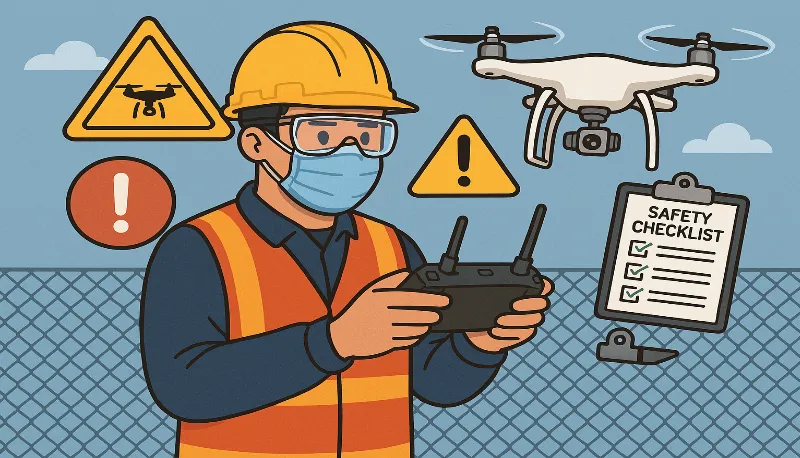
The "Hold My Controller" Guide to Drone Safety: What NOT to Do
The "Hold My Controller" Guide to Drone Safety: What NOT to Do
Alright, fellow pilots, gather ‘round. Today, we’re diving into the murky waters of drone disasters—those moments when overconfidence and poor judgment turn your beloved UAS into a lawn dart or a viral YouTube sensation. If you’ve ever thought, “It’ll be fine; what’s the worst that could happen?” let me assure you: everything. Everything could happen.
Here are some “brilliant” ideas that will guarantee you a starring role in the next episode of “Pilots Behaving Badly.”
1. Want to Make the Evening News? Fly Over a Crowd!
The Tempting Mistake:
You’re at a festival or a public event, and you think, “Wow, what an incredible shot I could get of this crowd! Let me fire up my drone and give these people an aerial show they’ll never forget.”The Reality Check:
Oh, they’ll never forget it, alright—especially when your drone plummets into the hot dog stand. Bonus points if someone gets mustard on their brand-new festival outfit. And don’t forget the hefty fine coming your way for flying over uninvolved people without the proper permissions.The Lesson:
Flying over crowds is a big no-no unless you’ve got a special authorization under specific conditions (Reg 2019/947 Art. 4). Why? Because drones falling out of the sky tend to ruin people’s day. Injuries, lawsuits, and losing your drone license—sounds like a party, right?Pro Tip:
Instead of playing aerial roulette with your drone, use a telephoto lens to get that sweet shot from a safe distance. Better yet, invest in a drone with a high-quality zoom camera. Your footage will be just as stunning, and you won’t need to dodge angry festival-goers wielding churros as weapons.2. Nothing Says 'Professional' Like Flying Without a Checklist
The Tempting Mistake:
You’re pumped to fly. You’ve got your drone, your controller, and your GoPro strapped to your forehead for maximum coolness. Who needs a checklist? You’re a natural!The Reality Check:
Five minutes into your flight, you realize you forgot to charge your battery. Your drone performs an impressive swan dive into the lake, and you’re left standing there, wondering why you didn’t listen to your inner voice saying, “Maybe I should check my gear first.”The Lesson:
A pre-flight checklist isn’t just for airline pilots—it’s your best friend. Checking your battery, propellers, firmware, and GPS connection is like brushing your teeth; it’s annoying but absolutely necessary.Pro Tip:
Make a simple checklist and tape it to your controller. Better yet, print it out and laminate it so you can smugly whip it out at meetups. Bonus points for using phrases like “Operational Excellence” while your friends look on in admiration.3. Because Who Needs Line of Sight Anyway?
The Tempting Mistake:
“I can totally fly this drone around that building. I mean, what could go wrong? It’s basically like playing a video game, but in real life.”The Reality Check:
Let’s see…lost signal, collision with an angry seagull, or your drone deciding to take a permanent vacation on a rooftop. Not to mention, flying beyond visual line of sight without the required permissions is a regulatory no-go (Reg 2019/947 Art. 4).The Lesson:
Maintaining visual line of sight isn’t just about keeping your drone in view—it’s about maintaining control and reacting to potential hazards. And yes, “potential hazards” include that rogue pigeon with a vendetta against all drones.Pro Tip:
If you want to fly BVLOS (Beyond Visual Line of Sight), get the proper certifications and authorizations. Until then, keep your drone where you can see it. Your drone’s GPS may be good, but it’s not perfect.4. Sure, the Manual Says X, But You’re Different, Right?
The Tempting Mistake:
“Pfft, manuals are for rookies. I’ve seen enough YouTube tutorials to know what I’m doing. Besides, how hard can it be?”The Reality Check:
Spoiler alert: it’s hard. Especially when you skip reading about things like return-to-home settings, battery warnings, and failsafe modes. When your drone decides to take off on its own, you’ll be wishing you had read that manual.The Lesson:
Drone manufacturers put those manuals in the box for a reason—they’re not just there to fill space. Knowing your drone’s specs, limitations, and emergency procedures can save you from costly mistakes.Pro Tip:
Treat the manual like your favorite novel. Highlight it, make notes, and dog-ear the pages. You might even discover cool features you didn’t know existed.5. Night Flights Without Permission: The Romantic Disaster
The Tempting Mistake:
“A nighttime drone flight would be so cinematic. Just imagine the stars, the city lights, the drama!”The Reality Check:
Until you realize your drone doesn’t have adequate lighting, you lose track of it, and your “cinematic masterpiece” turns into a search-and-rescue operation. Also, flying at night without proper authorization is a clear violation (Reg 2019/947 Art. 4).The Lesson:
Night flights require additional permissions and equipment, like anti-collision lights. Without them, you’re not just risking your drone—you’re risking the safety of others.Pro Tip:
If night flying is your dream, go through the proper channels to get authorization and equip your drone with the right lighting. Or, you know, just film a sunset instead.6. What’s the Worst That Could Happen If I Ignore the Weather?
The Tempting Mistake:
“Sure, it’s windy, but my drone can handle it! A little rain never hurt anyone, right?”The Reality Check:
Ever seen a drone get picked up by a sudden gust of wind and thrown into a tree like a frisbee? Or watched helplessly as it short-circuits mid-flight because of some harmless drizzle? It’s not pretty, and it’s not cheap.The Lesson:
Weather is not your friend when it comes to drones. Wind, rain, and even extreme temperatures can wreak havoc on your aircraft and lead to accidents.Pro Tip:
Check the weather forecast before every flight, and don’t fly in conditions your drone isn’t designed for. Trust me, watching your drone tumble across the sky like a rogue kite is not the adrenaline rush you’re looking for.7. Want to Lose Your Drone? Ignore the No-Fly Zones
The Tempting Mistake:
“Sure, I know there’s an airport nearby, but my drone’s GPS will keep me safe. I’ll just fly close enough for some awesome footage.”The Reality Check:
Congratulations, you’ve just earned yourself a visit from the authorities. Flying in restricted airspace without authorization is not only illegal—it’s extremely dangerous (Reg 2019/947 Art. 4).The Lesson:
No-fly zones exist for a reason. Airports, military areas, and other restricted zones are off-limits because they pose serious risks to aircraft and people.Pro Tip:
Use apps like Drone Assist or check the official airspace maps for your region. And if you’re ever in doubt, don’t fly. Your drone isn’t worth the risk of colliding with a passenger plane.Ready to Be a Pro?
Now that you know what NOT to do, let’s talk about doing things the right way. Follow the rules, take safety seriously, and keep your ego in check. The best pilots aren’t the ones with the flashiest maneuvers—they’re the ones who never have to explain their mistakes to the authorities.
Want to keep your license and your dignity? Then follow the regulations, respect the skies, and join the ranks of pilots who DON’T end up on drone fail compilations. Let’s make the skies safer and keep the “hold my beer” moments to a minimum. Happy flying!

About the Author
Roberto Gramellini
Aviation expert and UAS regulations specialist with extensive experience in EASA compliance and drone operations. Passionate about making complex regulations accessible to drone pilots across Europe.
EASA Regulatory Compliance Notice
This content is for educational purposes only and is based on EASA regulations current at the time of generation.
Always consult the official EASA documentation and your local aviation authorities for the most current regulations and legal compliance requirements before operating any UAS.