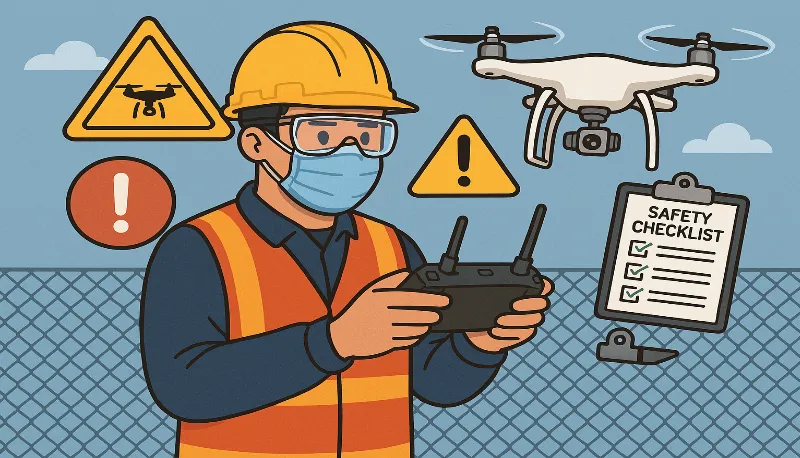
How to Be *That* Pilot: A Cautionary Guide to Drone Mishaps
How to Be That Pilot: A Cautionary Guide to Drone Mishaps
Ah, the world of drones—a place where dreams take flight and, occasionally, crash into trees, ponds, or unsuspecting wedding cakes. Whether you're a seasoned pilot or a wide-eyed newbie, this guide is here to help you avoid becoming the subject of internet ridicule, hefty fines, or awkward conversations with local authorities.
So, you want to be that pilot, huh? Here’s how to do it:
1. "Who needs a checklist? I’ve got this!"
The Tempting Mistake:
You’re the Maverick of drones—cool, confident, and way too busy to bother with pre-flight checks. After all, what could go wrong? Spoiler: Everything.The Reality Check:
Congratulations, you’ve just launched your drone with a dead battery, forgotten to secure your propellers, or left your SD card at home. Bonus points if your drone decides to "return to home" mid-flight—straight into your neighbor’s prized rose bushes.The Lesson:
Pre-flight checklists exist for a reason. They're like seatbelts: annoying until you need them. Skipping this step is how you turn a fun afternoon into a cringe-worthy lesson in humility.Pro Tip:
Use a checklist every single time, even if you think you’re too good for it. Check your battery levels, propellers, firmware updates, and GPS signal. Trust me, you’ll look cooler landing your drone safely than explaining why it’s stuck in a tree.2. "Let’s see how high this baby can go!"
The Tempting Mistake:
Why stop at 120 meters when your drone can soar higher than your ego? You’re practically Buzz Lightyear, shouting "To infinity and beyond!"The Reality Check:
Newsflash: EASA regulations cap your altitude at 120 meters above ground level for a reason (Reg 2019/947 Art. 4). Exceeding this limit is a surefire way to interfere with manned aircraft. If you think pilots enjoy dodging drones, think again. Oh, and enjoy your hefty fine—those aren’t cheap.The Lesson:
Height limits aren’t just arbitrary rules; they’re essential for keeping everyone safe, including yourself. And no, you won’t outrun an Airbus A320.Pro Tip:
Stay below 120 meters and avoid restricted airspace. Use your drone’s altitude limiter—most have this feature built in. This isn’t the Olympics; there’s no medal for "Highest Drone in the Sky."3. "The manual says no rain, but I’m sure it’s fine..."
The Tempting Mistake:
Rain? Snow? Hurricane-level winds? Pfft. Your drone’s practically a superhero—surely it can handle a little drizzle.The Reality Check:
Turns out, your drone isn’t waterproof. Flying in bad weather is like driving a convertible in a car wash—fun for about 10 seconds, until your electronics fry. And wind? Say goodbye to your drone as it sails off into the sunset, never to be seen again.The Lesson:
Weather matters. Flying in unsuitable conditions is a fast track to wrecking your drone and potentially injuring someone.Pro Tip:
Check the weather forecast before you fly. Avoid rain, snow, and winds exceeding your drone’s capabilities. Unless you enjoy explaining to your insurance company how your drone became a submarine.4. "I don’t need permission; it’s just a quick flight!"
The Tempting Mistake:
You spot the perfect location—a bustling city square, a crowded beach, or even an airport perimeter. Surely no one will mind a quick flight, right?The Reality Check:
Wrong. Flying in restricted areas without authorization is a one-way ticket to fines, confiscation, or, worse, becoming the star of a police chase. Urban areas and airports are no-fly zones for a reason (Reg 2019/947 Art. 5).The Lesson:
Always check for restrictions before flying. Ignorance isn’t an excuse, and "just a quick flight" can lead to serious consequences.Pro Tip:
Use apps like DroneMaps or EASA's UAS Geographical Zones tool to check for restricted areas. If you need authorization, apply for it well in advance. Trust me, you don’t want to be the guy whose drone caused a flight delay.5. "I’ll just wing it on the controls. How hard can it be?"
The Tempting Mistake:
You’ve watched a couple of YouTube tutorials, and now you’re ready to go full Spielberg with your drone. Why waste time practicing when you’ve got natural talent?The Reality Check:
Without practice, your drone operation will look less like Top Gun and more like The Fast and the Furious: Drone Drift Edition. Expect to crash into walls, trees, and possibly your own face.The Lesson:
Flying a drone requires skill, and skill requires practice. The more confident you are, the safer your flights will be.Pro Tip:
Start small. Practice in open areas away from people, buildings, and wildlife. Gradually work your way up to more complex maneuvers. Because nothing screams "rookie" like a drone stuck in your own backyard tree.6. "Rules? What rules?"
The Tempting Mistake:
You think drone regulations are more like guidelines than actual rules. After all, you’re just flying for fun—why bother with all that legal mumbo jumbo?The Reality Check:
Ignoring regulations is the fastest way to lose your drone, your license, and a significant chunk of your bank account. Whether it’s flying over crowds (Reg 2019/947 Art. 4) or exceeding distance limits (Reg 2019/947 Art. 5), breaking the rules can lead to fines, lawsuits, or even jail time.The Lesson:
Drone regulations aren’t optional. They’re there to protect you, your equipment, and everyone else.Pro Tip:
Familiarize yourself with EASA’s rules before you fly. Bookmark the regulations, read them, and follow them. Because "I didn’t know" won’t fly in court.7. "Who needs a spotter? I’ve got great eyesight!"
The Tempting Mistake:
You decide to fly beyond visual line of sight (BVLOS) because you’re confident your drone knows its way home.The Reality Check:
Before you know it, you’ve lost sight of your drone. Panic sets in. Is it over the forest? The highway? That lake? You have no idea.The Lesson:
Always keep your drone within visual line of sight (Reg 2019/947 Art. 4). Flying beyond this limit is not only illegal—it’s also a recipe for disaster.Pro Tip:
Use a spotter if needed, especially for complex flights. And always keep your eyes on the prize (your drone). This isn’t hide-and-seek; it’s aviation.Final Thoughts: Don’t Be a Statistic
The truth is, we’ve all made mistakes—some of us more spectacularly than others. But the difference between a great drone pilot and that pilot is learning from those mistakes.
Want to keep your license, your drone, and your dignity intact? Follow the rules, respect safety guidelines, and always think before you fly. Remember: the sky isn’t the limit—it’s a privilege.
Now go out there and fly responsibly. Because trust me, it’s way more fun to be a skilled pilot than a cautionary tale. ✈️

About the Author
Roberto Gramellini
Aviation expert and UAS regulations specialist with extensive experience in EASA compliance and drone operations. Passionate about making complex regulations accessible to drone pilots across Europe.
EASA Regulatory Compliance Notice
This content is for educational purposes only and is based on EASA regulations current at the time of generation.
Always consult the official EASA documentation and your local aviation authorities for the most current regulations and legal compliance requirements before operating any UAS.