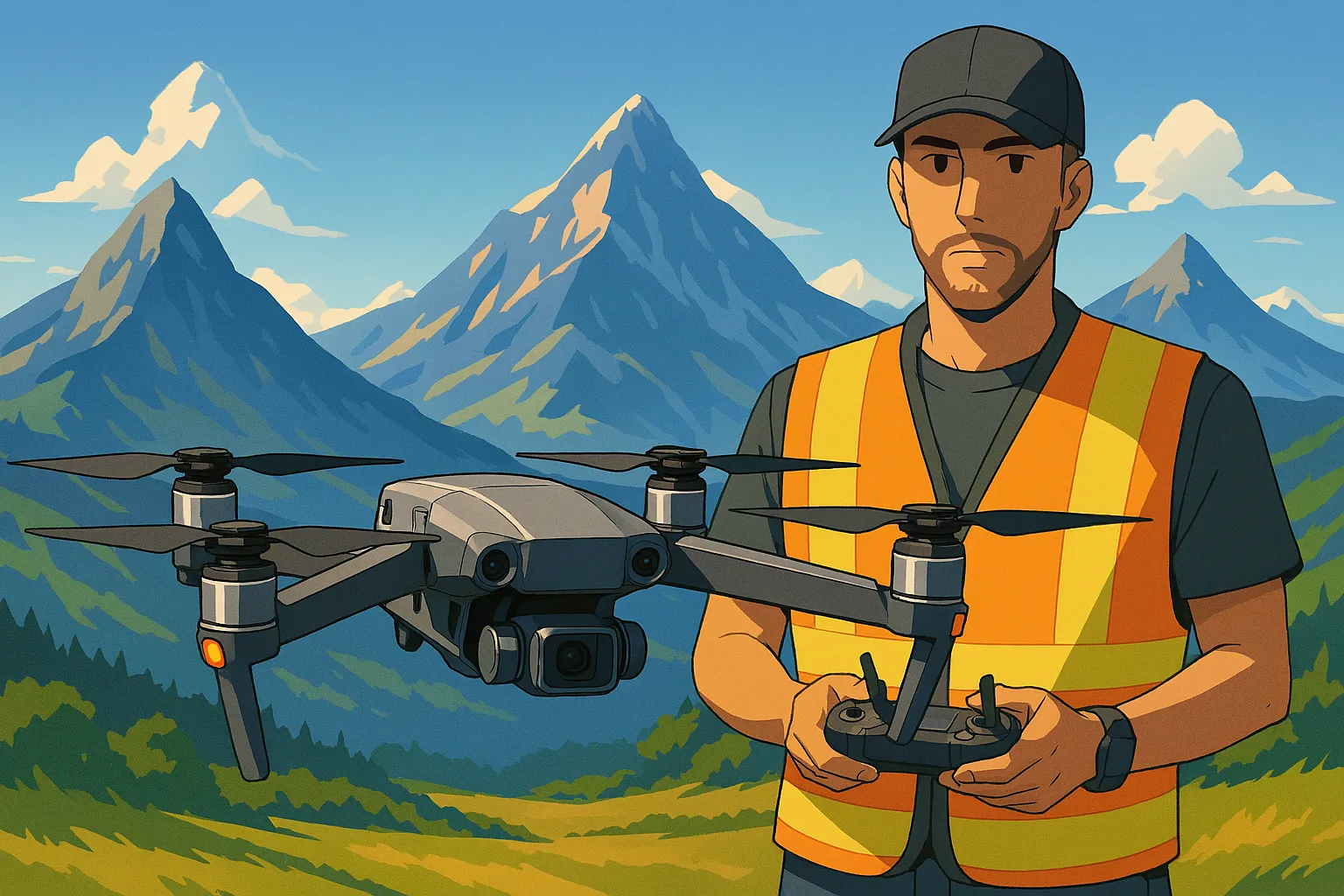
Remote Pilot Responsibilities and Best Practices: A Complete Guide
Remote Pilot Responsibilities and Best Practices: A Complete Guide
Introduction
Imagine this: You’re a drone pilot setting up for a scenic shoot over a breathtaking European coastline. You’ve done your pre-flight checks, and your drone is ready to take off. But just before you push the throttle, a question pops into your head—are you fully aware of the legal responsibilities and best practices to ensure you’re flying safely and within the law?At 120mAGL.com, we’re dedicated to empowering European drone pilots with the knowledge they need to fly responsibly, legally, and confidently. In this guide, we’ll break down the key responsibilities of remote pilots under EASA regulations, provide actionable best practices, and explore real-world examples to help you stay compliant and avoid penalties.
Whether you’re flying for recreation, commercial purposes, or research, understanding your role as a remote pilot is crucial. With EASA regulations in place across Europe, this article will help you navigate the rules, including the all-important 120m altitude limit.
Let’s dive into the details and make compliance simple and practical for drone pilots across Europe.
Overview and Background
Why Do Remote Pilot Responsibilities Matter?
Unmanned Aircraft Systems (UAS) have revolutionized industries like photography, agriculture, and infrastructure inspection. However, their increasing presence in the skies has raised concerns about safety, privacy, and airspace management. Remote pilots are the key to ensuring drones operate safely and responsibly.The European Union Aviation Safety Agency (EASA) has established comprehensive regulations to harmonize drone operations across Europe. These rules aim to minimize risks to people, property, and manned aviation while supporting innovation and growth in the drone sector.
Historical Context of EASA Drone Regulations
EASA regulations for drones were introduced to address the growing use of UAS in Europe. The cornerstone of these rules is Regulation (EU) 2019/947, which sets out the requirements for operators, remote pilots, and drones themselves. The regulations apply to both recreational and commercial drone operations, ensuring uniform standards across member states.The 120m altitude limit is a critical component of EASA rules, designed to maintain safe separation between drones and manned aircraft operating at higher altitudes.
Detailed Requirements
Remote Pilot Responsibilities Under EASA Regulations
As a remote pilot, you are legally responsible for the safe operation of your drone. Here are the key obligations:1. Understanding Operational Categories
Drone operations are divided into three categories: Open, Specific, and Certified. Most recreational and small commercial flights fall under the Open category, which has predefined limitations to ensure low-risk operations.- ▸Open Category Requirements:
- ▹Maximum altitude of 120m above ground level (Reg 2019/947 Art. 4).
- ▹Maintain visual line of sight (VLOS) at all times (Reg 2019/947 Art. 4).
- ▹Do not fly over assemblies of people unless the drone is classified as C0 or C1 (Reg 2019/947 Art. 4).
2. Pre-Flight Risk Assessments
Before flying, you must assess potential risks to people, property, and other airspace users. Factors to consider include:- ▸Weather conditions.
- ▸Proximity to restricted zones or airports.
- ▸The capabilities of your drone and its fail-safe features.
3. Compliance with Geographical Zones
EASA mandates that pilots respect geographical zones established by member states. These zones may restrict or prohibit drone flights due to safety, security, or environmental concerns (Reg 2019/947 Art. 15).4. Maintaining Drone Registration and Pilot Certification
- ▸All drones weighing 250g or more must be registered in the operator's country of residence (Reg 2019/947 Art. 14).
- ▸Remote pilots flying drones in the Open category must complete online training and pass a competency test for subcategories A1 and A3 (Reg 2019/947 Art. 8).
5. Ensuring Safe Operations
As a remote pilot, you must ensure your drone operates safely at all times. This includes:- ▸Avoiding reckless or negligent flying.
- ▸Ensuring your drone is in good working condition.
- ▸Complying with all airspace restrictions.
Practical Application
Real-World Scenarios for Compliance
Scenario 1: A Photographer Operating in a Busy City
A photographer plans to capture aerial shots in a bustling urban area. To comply with EASA regulations:- ▸The drone must be classified as C0 or C1 to fly over people.
- ▸The pilot must identify restricted zones using an airspace map.
- ▸The flight altitude must not exceed 120m (Reg 2019/947 Art. 4).
Scenario 2: Inspecting Infrastructure Near an Airport
A commercial operator conducts infrastructure inspections near an airport. Steps to ensure compliance:- Check geographical zones for restrictions (Reg 2019/947 Art. 15).
- Obtain authorization for flights in controlled airspace, if required.
- Maintain VLOS and avoid interference with manned aircraft.
Common Questions and Challenges
Q1: Can I fly my drone beyond visual line of sight (BVLOS)?
BVLOS operations are allowed only in the Specific or Certified categories with prior authorization and a detailed operational risk assessment (Reg 2019/947 Art. 5).Q2: How do I know if my drone needs to be registered?
Drones weighing 250g or more or equipped with cameras/sensors must be registered (Reg 2019/947 Art. 14).Q3: What happens if I accidentally exceed the 120m altitude limit?
Exceeding the altitude limit violates EASA regulations and could result in penalties or suspension of your pilot certification (Reg 2019/947 Art. 4).Q4: Can I fly over people during public events?
Flying over assemblies of people is prohibited unless your drone is classified as C0 or C1 (Reg 2019/947 Art. 4).Compliance Checklist
Step-by-Step Guide to Flying Legally
- ▹Ensure your drone meets registration requirements.
- ▹Pass the competency test for your operational subcategory.
- ▹Check airspace maps and geographical zones.
- ▹Conduct a risk assessment.
- ▹Stay within 120m altitude.
- ▹Maintain VLOS at all times.
- ▹Avoid flying over private property without permission.
- ▹Steer clear of assemblies of people.
- Register Your Drone
- Complete Pilot Training
- Plan Your Flight
- Follow Operational Limits
- Respect Privacy and Safety
Case Studies
Case Study 1: Recreational Flight in a National Park
A hobbyist flying a drone in a national park discovers that the area is a restricted zone. By using an airspace map, the pilot adjusts their flight plan to operate outside the restricted area, ensuring compliance with EASA rules.Case Study 2: Commercial Inspection in a Residential Area
A drone operator conducts roof inspections in a residential area. The pilot ensures the drone remains within 120m altitude, avoids flying over people, and obtains homeowner consent for the operation.Summary and Key Takeaways
Key Points for Remote Pilots
- ▸Stay below 120m to ensure safe separation from manned aircraft.
- ▸Maintain visual line of sight at all times.
- ▸Register your drone if it weighs 250g or more or has sensors.
- ▸Conduct a risk assessment before every flight.
- ▸Respect geographical zones and privacy laws.
Next Steps
- ▸Bookmark 120mAGL.com for updates on EASA regulations.
- ▸Complete your pilot training and stay informed about operational categories.
- ▸Use airspace maps and drone apps to plan safe flights.
References and Resources
EASA Regulations Referenced
- ▸Reg 2019/947 Art. 4: Operational limits for drones.
- ▸Reg 2019/947 Art. 5: Specific category requirements.
- ▸Reg 2019/947 Art. 8: Remote pilot competency.
- ▸Reg 2019/947 Art. 14: Drone registration.
- ▸Reg 2019/947 Art. 15: Geographical zones.
Related Articles
- ▸
- ▸
Disclaimer
Regulations are subject to change. Always check official EASA sources for the latest information.Fly responsibly, stay informed, and keep safety at the forefront of your drone operations. 120mAGL.com is here to support you every step of the way.

About the Author
Roberto Gramellini
Aviation expert and UAS regulations specialist with extensive experience in EASA compliance and drone operations. Passionate about making complex regulations accessible to drone pilots across Europe.
EASA Regulatory Compliance Notice
This content is for educational purposes only and is based on EASA regulations current at the time of generation.
Always consult the official EASA documentation and your local aviation authorities for the most current regulations and legal compliance requirements before operating any UAS.