BlogPost
Future Trends in UAS Technology
10 min read
Amazon Prime Air: The Rise and Abrupt Fall of Drone Delivery in Italy
Summary:
Amazon Prime Air: The Rise and Abrupt Fall of Drone Delivery in Italy A comprehensive investigation into the decade-long journey of Amazon’s drone-delivery ambitions — and why the Italian program collapsed just days ago. Introduction For more than a decade, Amazon Prime Air represented one of...
Amazon Prime Air leaves Italy
A short history of the decade-long journey of Amazon’s drone-delivery ambitions — and why the Italian program collapsed just days ago.
Foreword
The views expressed in this article are my own and do not necessarily reflect the official positions of ENAC or any other organizations mentioned. The aim is to provide a critical and well‑informed analysis based on in‑depth research within industry.Introduction
For more than a decade, Amazon Prime Air represented one of the most ambitious technological bets in modern logistics: the promise that autonomous drones could reinvent last-mile delivery, slashing congestion, emissions, and delivery times across Europe and the United States. It was a bold, futuristic vision — one that stood symbolically at the crossroads of aviation, robotics, e-commerce, and regulation. Italy, a country with a vibrant aerospace sector, advanced UAS (Unmanned Aircraft Systems) industrial ecosystem, and one of Europe’s earliest regulators to implement harmonized EU drone rules, was intended to be among Amazon’s flagship European testbeds. The central regions of Emilia-Romagna, Lombardy, and Piedmont were evaluated for operations and a internal documents hinted at a large-scale rollout beginning in 2026. But a few days ago, news broke: Amazon is shutting down its drone delivery program in Italy entirely. The decision shocked aviation insiders, policymakers, and e-commerce specialists alike. What had once been marketed as the future of ultrafast delivery — complete with sleek prototypes and inspiring promotional videos — had come to an abrupt halt. To understand why, we must look back at the full history of Prime Air, from its meteoric rise to its operational struggles, European regulatory friction, the promise of technological breakthroughs, and finally, the Italian shutdown that marked one of the most symbolic failures in Amazon's innovation portfolio. This article reconstructs that story in full.1. How It All Began: The Prime Air Vision (2013-2016)
The origins of Amazon Prime Air date back to December 1, 2013, when Jeff Bezos unveiled the concept during an interview on the CBS program 60 Minutes. The world watched, fascinated, as Amazon released early footage of a multi-rotor drone lifting off from an undisclosed facility and flying autonomously to deliver a small package to a suburban home. Bezos declared that within “four to five years,” autonomous drones could routinely deliver packages weighing up to 5 pounds (around 2.3 kg), which represented nearly 80% of Amazon’s catalog at the time.The First Milestones (2013-2016): A Timeline
| Year | Milestone |
|---|---|
| 2013 | Bezos publicly announces Prime Air; internal R\&D accelerates. |
| 2014 | Amazon begins extensive prototype testing in the U.S. and the U.K. due to more flexible airspace rules. |
| 2015 | Amazon files numerous patents for parachute systems, sense-and-avoid algorithms, and docking stations. |
| 2016 | The first fully autonomous public test delivery is conducted in Cambridge, U.K., under a CAA (Civil Aviation Authority) exemption. |
- Autonomous navigation algorithms
- Redundant flight-control systems
- Advanced obstacle-avoidance sensors
- Geo-fencing modules aligned to European and American aviation rules
2. Expansion, Regulatory Battles, and the First Cracks (2017-2020)
While technological progress remained strong, Amazon began to face an unexpected reality: advanced drone operations were not primarily an engineering problem — they were a regulatory one.Why Europe — and Italy — Became Central
With the forthcoming EU UAS Regulation Package 2019/947 and 2019/945, Europe became the first region in the world to introduce a harmonized regulatory framework for drones:- Common rules for all Member States
- Clear operational categories (Open, Specific, Certified)
- Standardized risk-assessment procedures (SORA)
- Large metropolitan areas ideal for pilot projects
- Strong industrial partners (Leonardo, Telespazio, Thales Alenia Space)
- Growing U-space initiatives in Lombardy and Veneto
- A culture increasingly open to urban-air-mobility solutions
Amazon’s Global Expansion Timeline (2017-2020)
| Year | Event |
|---|---|
| 2017 | Amazon builds dedicated drone R\&D centers in Austria, France, the U.K., and the U.S. |
| 2018 | Prime Air receives an FAA Part 135 certification pathway. |
| 2019 | Amazon unveils the MK27 drone at re:MARS, a more stable hexagonal design capable of vertical and forward flight. |
| 2020 | FAA grants Amazon a full Part 135 air carrier certification, enabling deliveries in the U.S. |
Internal Problems Begin to Surface
By 2020, employees began reporting:- High turnover in engineering teams
- Frequent redesigns of flight software
- Conflicts between safety engineers and leadership timelines
- Overly optimistic public commitments
3. The MK30 Era and European Integration (2021-2023)
In November 2022, Amazon announced a next-generation aircraft: the MK30, a sleeker, lighter drone with improved range, reduced noise, and better environmental performance. Meanwhile, the EU began laying the groundwork for U-space, a digital traffic-management system for drones that Italy embraced enthusiastically.Key European and Italian UAS Milestones
| Year | Milestone |
|---|---|
| 2021 | ENAC publishes national guidelines on U-space implementation. |
| 2022 | Italy launches early U-space test zones in Lombardy and Puglia. |
| 2023 | Many Italian municipalities adopt drone corridors for medical and industrial logistics. |
Amazon’s Italian Ambitions (Reconstructed Timeline)
While Amazon never publicly disclosed every detail, interviews with industry executives and leaked internal presentations indicate:| Year | Amazon Italy Prime Air Timeline |
|---|---|
| 2021 | Site-selection analysis begins for northern Italy. |
| 2022 | Amazon meets with ENAC officials regarding risk-assessment pathways under the Specific Category. |
| 2023 | Amazon evaluates logistics hubs in Emilia-Romagna and Lombardy for MK30 operations. |
| Early 2024 | Internal documents propose a target launch date of late 2026. |
4. Structural Problems Intensify (2023-2025)
Despite promising pilot operations in the U.S. and limited tests in the U.K., Amazon struggled to achieve scalable, economically viable drone deliveries.Technical Challenges
- Limited battery efficiency
- Noise and environmental constraints
- Difficulty integrating operations into dense European urban spaces
- Failures in sense-and-avoid certification
- Weather sensitivity (rain, wind, and fog all affected Italian operations)
Regulatory Challenges
Even with U-space, Italy still required:- SORA risk assessments
- Ground-risk mitigations
- Flight-area containment
- Community-acceptance studies
Economic Challenges
Drone delivery turned out to be:- More expensive than van or bike couriers
- Dependent on expensive infrastructure
- Operationally fragile
- Dependent on extremely high automation levels
San Salvo: The Lost Hope
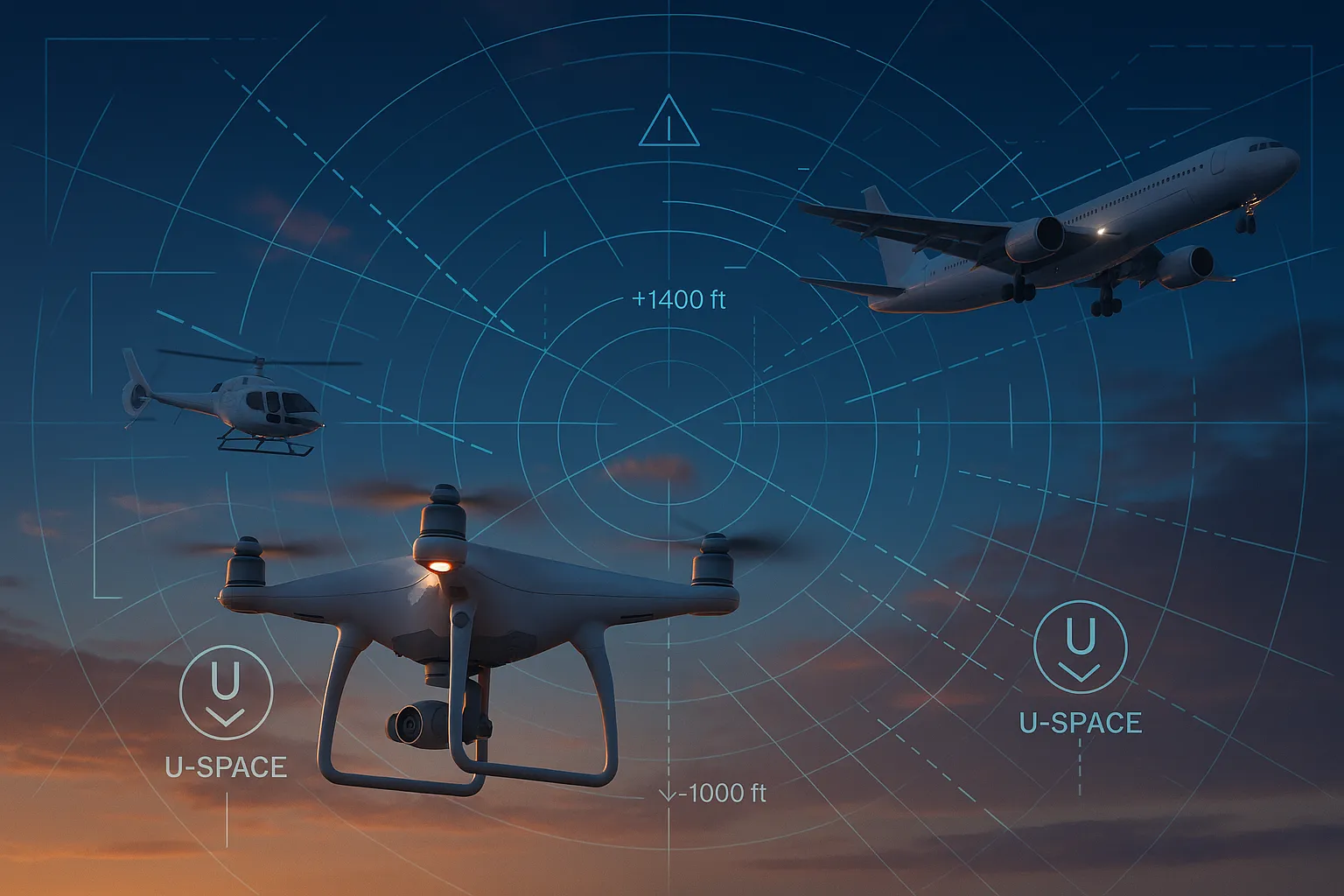
For months, Amazon’s logistics hub in San Salvo, Abruzzo, had been portrayed as one of the most promising European outposts for last-mile drone delivery - a potential flagship launchpad for Prime Air on the continent. Yet, despite the intense anticipation, the drones of the Seattle giant will never take off from its warehouses. Alongside the operational shutdown, Amazon has formally withdrawn its request for the Light UAS Operator Certificate (LUC), a crucial regulatory credential that would have allowed the company to autonomously conduct complex missions without seeking individual authorizations each time. According to statements from ENAC, the National Civil Aviation Authority, the decision was not the result of any friction with the Italian regulatory ecosystem. On the contrary, Amazon reportedly expressed "undisputed appreciation" for the collaboration carried out with Italian authorities. The choice to relocate both the commercial launch and the certification process to another EU member state is attributed instead to new corporate policies and the financial headwinds that have pushed Amazon toward a far-reaching reassessment of its global investments. Yet the end of Prime Air in Abruzzo does not bring Italian innovation to a halt. On January 1, 2026, the region will inaugurate U-Space San Salvo, the first fully operational U-space hub in Europe. Far from being a simple restricted zone, U-space represents a digitally managed segment of airspace enabling full integration between manned and unmanned flight operations. This environment will serve as a testbed for advanced research and development, emergency operations requiring secure aerial corridors, and high-safety territorial monitoring missions. The project reflects a robust collaboration between D-Flight, ENAV, and 35 regional stakeholders, signaling Italy’s determination to build one of the most advanced regulatory and technological infrastructures in Europe. But despite the enthusiasm surrounding this milestone, the absence of what was meant to be its principal “anchor tenant” casts a long shadow over the landscape — a reminder of the uncertainty still surrounding drone-delivery ecosystems in Europe.5. December 2025: Amazon Abruptly Cancels Prime Air Italy
A few days ago, news spread across industry channels: Amazon is shutting down Prime Air operations and development plans in Italy. On 27 December, ENAC did not hesitate to publish a press release (no. 068/2025) confirming what had happened, while also reassuring the public of its intention to activate the San Salvo U‑Space starting from 1 January 2026 — the first U‑Space in Europe. This is a portion of airspace where the integration between crewed flights and remotely piloted flights takes place, an essential element to ensure the full and safe operation of unmanned aircraft, enabling experimental activities and emergency operations. Enac da gennaio 2026 lancia il primo U-Space europeo nonostante la sospensione del progetto Amazon Prime Air in Italia6. Why Amazon Prime Air Failed in Italy
After interviews with regulators, engineers, and industry observers, several themes emerge.6.1. Italy’s Complex Urban Landscape
Unlike the U.S., Italian metropolitan areas:- Have narrow historical streets
- Possess dense, irregular building layouts
- Include restrictive no-fly zones around heritage sites
- Are subject to strict local noise and environmental ordinances
6.2. Slow and Conservative Certification Pathways
Despite being aligned with EASA frameworks, Italy (like most EU countries) demands extremely robust safety evidence. Amazon failed to achieve:- Reliable detect-and-avoid certification
- Compliance with U-space service-provider standards
- Stable integration with existing aviation traffic
6.3. Financial Sustainability
Drone delivery was far from cost-effective in Europe:- High training and operational costs
- Expensive infrastructure
- Limited payload versatility
- Weather-related service unreliability
6.4. Cultural Resistance
European citizens tend to be:- More privacy-conscious
- More skeptical about low-flying autonomous drones
- More sensitive to environmental and noise issues
6.5. Internal Amazon Issues
Prime Air suffered from:- Frequent reorganizations
- Dissatisfaction among engineers
- Unrealistic executive timelines
- High operational overhead
7. What the Italian Shutdown Means for Amazon—and for Europe
The cancellation in Italy is not just a local event; it is symbolically powerful:- It represents Amazon withdrawing from a strategically chosen European market.
- It signals that drone delivery may not scale in dense urban regions.
- It opens the door for European competitors, including medical-delivery startups.
- It raises questions about the long-term viability of drone logistics.
8. Will Drone Delivery Ever Work in Europe?
Despite Amazon’s retreat, Europe continues to:- Invest heavily in U-space
- Support medical drone delivery corridors
- Encourage BVLOS operations
- Develop domestic manufacturers
Conclusion: The End of an Era?
Amazon Prime Air was born as a daring, even romantic vision: the idea that thousands of small autonomous aircraft buzzing across the sky could reinvent commerce. In reality, the project proved to be:- Technically brilliant
- Ambitiously visionary
- Economically fragile
- Operationally complex
- Deeply mismatched with European regulatory and cultural realities

About the Author
Roberto Gramellini
Aviation expert and UAS regulations specialist with extensive experience in EASA compliance and drone operations. Passionate about making complex regulations accessible to drone pilots across Europe.
EASA UAS Regulations
ENAC Italian Compliance
Drone Safety Procedures
Aviation Law
Remote Pilot Training
EASA Regulatory Compliance Notice
This content is for educational purposes only and is based on EASA regulations current at the time of generation.
Always consult the official EASA documentation and your local aviation authorities for the most current regulations and legal compliance requirements before operating any UAS.